Home | Nature/Adventure | Ancient Glory | Rich Package | Sri Lanka Holidays | Total Holiday Experience | Travel Guide | Lanka History | Hotel Guide

|
Home | Nature/Adventure | Ancient Glory | Rich Package | Sri Lanka Holidays | Total Holiday Experience | Travel Guide | Lanka History | Hotel Guide |
|
|
 |
Sri Lanka Holidays & Sri Lanka ToursSri Lanka Holidays - A Total Holiday Experience, The Land of delightsSri Lanka Tours: Beaches, Nature & Adventure, The Land of Buddha's HeritageSri Lanka Holidays and Sri Lanka's cultural heritage are two sides of the same coin. The ancient and medieval great man-made lakes [rainwater irrigation reservoirs], the magnificent feats of hydraulic engineering built to collect and distribute rainwater from the Central Highlands to the paddy fields in the North-Central Plains, the East, and the Deep South are also the main tourist attractions. The cascading network of reservoirs, that is, the wealth of collected rainwater, provides the lifeline to the ancient nation. In the same vein, the clusters of great ancient and medieval stupas, forest monasteries, and temples provide spiritual nourishment and solace to millennia-long generations of Buddhists. Therein is the value of Sri Lanka Holidays. It is not simply holidays: it is a lesson in living heritage and the lifeline of Sri Lanka. Inseparable.
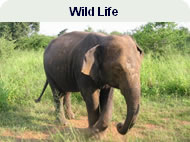
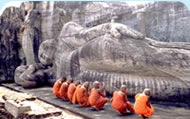
Drive around the great bund of the inland sea-like Parakrama Samudra [Sinhala: Sea of Parakrama] at the world heritage site of Polonnaruwa , with the sweeping breeze from the reservoir threatening to throw the car off the dam's incline and down into the paddy fields. Relax on the great lake bank, gaze at the shimmering water under the tropical sun, and learn of the ancient "Bisokotuwa" [Sinhala: enclosure of the queen] water channeling valve pit, an ancient hydraulic and irrigation invention. Sit tight at the foot of a statue of Buddha at the famous "Gal Vihara" [Sinhala: Stone Temple] in UNESCO World Heritage Site of Polonnaruwa and soothe your mind, entranced by the slipstream thin smile of Buddha of boundless compassion. Sri Lanka's great lakes were built by free citizens led by Sinhalese kings. Rocks were blasted, rivers were damned - sorry, dammed - and waters flowing downwards from the Central Highlands to the North Central Plains were channeled to the paddy fields. Once again, it was free citizens who built the great stupas. "The Mahavamsa," the paramount histoical chronicle of Sri Lanka, narrates King Dutugamunu's provisions for the builders of the stupendous Ruwanveli Seya stupa at the UNESCO World Heritage Site of Anuradhapura: "And he made it known: 'Work shall not be done here without wage.' At every gate he commanded to place sixteen hundred thousand kahapanas, very many garments, different ornaments, solid and liquid foods and drink withal fragrant flowers, sugar and so forth, as well as the five perfumes for the mouth. 'Let them take of these as they will when they have labored as they will.' Observing this command, the king's work-people allotted (the wages)." (Chapter XXX, Mahavamsa, The Great Chronicle of Ceylon by Wilhelm Geiger, Ph. D. ISBN 955-8540-83-8) Together the great lakes, colossal stupas, monumental temples embody the material and spiritual foundations of ancient Sri Lankan civilization that flourished since 543 BC. It would be enlightening to learn that the Mahavamsa and related chronicles (Dipavamsa & Culavamsa) are not "interpretations" or "perspectives" in the postmodern sense. OK, OK, You want me to temper my tone? Moment, now. .... Unlike many purely literary narratives, the Mahavamsa is substantially corroborated by archaeological, epigraphic, hydraulic, and architectural evidence. Pleased now? Yes. Wonderful. It cannot get any better. They are faithful records transmitted by a series of ancient, medieval, and early modern Buddhist priests whose sole commitment was to doctrinal accuracy and historical memory. The chronicles' accounts of specific kings building specific irrigation reservoirs and stupas are verified by tangible evidence that remains Sri Lanka's lifeline irrigation water system and spiritual landscape today. This immensely enlightening, satisfying and sustaining material corroboration lifts the text above the realm of mere narrative. The Mahavamsa is not a single dictation but a layered composition, the earliest extant Pali version attributed to the Buddhist monk Mahanama in the 6th century CE. The ancient and medieval kings of Lanka held two duties above all others: preserving Buddhism and preserving rainwater. King Dutugamunu famously declared, "Not for the joy of sovereignty is this toil of mine, my striving has been ever to establish the doctrine of the Sambuddha" (Mahavamsa, Chapter XXV). When his son Prince Kashyapa usurped the throne and demanded the royal treasure, King Dathusena led him to the reservoir he had built. He performed a ritual bath and took a handful of water in his cupped palms. that handful was all he claimed: "This alone is my wealth." Today, you can dive into the waters of Kala Weva at a popular safe swimming area by the motorway along the reservoir, enjoy your swim, and share spicy rice and curry with freshwater fish on the shores. King Kashyapa, in turn, would not be outdone in leaving a heritage to his nation. He built the inaccessible Sigiriya Lion Rock fortress-palace. Climb Sigiriya on the double, [ no, no, no. slow down ... it's a long way up by the staircase, hold tight onto the rail... the force of wind on the body turning stronger ] to enjoy the Sigiriya frescoes; learn of medieval hydraulic engineering and landscape gardening. Sit on the sprawling shores of far-spreading ancient Minneriya rainwater irrigation reservoir and enjoy the sight of herds of wild elephants grazing reeds with no care of the jeeps and tourists on three sides. Stoic. Anuradhapura and Polonnaruwa are studded with colossal stupas and vast rainwater reservoirs. Therein is the lifeline. These are not "textual effects"; they are magnificent hydraulic and architectural monuments that align with the chronicle. That is genuine historical evidence, and no theory of narrative emplottment can dissolve a brick of a stupendous stupa or a rock of an immense reservoir. Therein lies the true value of Sri Lanka Holidays. It is not simply a leisure experience or a tourist destination; it is an encounter with a living heritage, a journey into the cultural, spiritual, and historical lifeblood of Sri Lanka. An opportunity to be enlightened. Who wouldn't like to be enlightened? Modern scholars often debate whether history is merely a story told from a particular point of view. Such discussions may be important in universities, but Sri Lanka offers visitors something more tangible. Here, the chronicles do not stand alone on library shelves. The reservoirs still hold waters. The canals still carry waters to the paddy fields. The stupendous stupas still rise above the plains. Whether one approaches the Mahavamsa as history, literature, or sacred tradition, the remarkable fact remains that much of the world it describes survives right in front of our eyes. A traveler can stroll among the monuments, stand upon the ancient reservoir bunds, and witness a living landscape shaped by the very civilization recorded in the chronicles. For many visitors, this continuity is one of the most fascinating aspects of Sri Lanka. The island's heritage is not confined to museums or archaeological reports. It remains part of everyday life, connecting past and present across more than two millennia. In that sense, Sri Lanka is not merely a destination to be visited, but an extraordinary civilization to be experienced. Sri Lanka Tours. You will escape, unwind, travel, tour, explore & discover Sri Lanka Holidays ("India without the hassle" - Arthur C. Clarke) with us. Mine a wealth of knowledge in an Eastern Destination anchored to over two and a half millennia of unbroken recorded history, with eight UNESCO World Heritage Sites, including the whole ancient cities of outstanding value to humanity. Here is an Island with more than twenty-five centuries of historical & cultural affinity, love & hate with the Indian subcontinent- fons et origo (the source & origin). What we offer isn't a Sri Lanka Tour of either a Rough Guide or a simple Insight Guide to a Lonely Planet but to follow the Footprint Sri Lanka of Marco Polo & Ibn Battuta, among many other voyagers. Our High Value, High Definition Sri Lanka Holidays of Historical-Cultural sites, Eco-tourism zones, Nature & Adventure sites, British Ceylon sanatoriums of Nuwara Eliya, Ella, Haputale, Bandarawela, Diyatalawa in the Central Highlands, Wild Life parks & Bird Sanctuaries topped by Sacred footprint of Buddha at the summit of Mount Sri Pada, also known as Adam's Peak, Butterfly Mountain & Samantakuta overwhelms you all with THE, Total Holiday Experience Sri Lanka Holidays Beaches are for all days, all nights; for all seasons, year round Planning Your TripYour ideal travel time depends entirely on the experience you seek. For guaranteed sunshine and ease of travel: Visit during the peak season (December to March). Be prepared for larger crowds. For the iconic, lush green landscapes and active farming scenes: Travel during the Yala season (May to September). For surfing and east coast beaches with fewer crowds: Target the low season (May to September). For tranquility and the most vibrant, rejuvenated nature: Consider the quiet inter-monsoon periods (April, September-October). A Seasonal Guide for TravelersThis guide will help you use the season to find the perfect destination within Sri Lanka. December to March (Peak Season: South, West & Central Highlands): The classic tourist season. You can expect sunny, dry weather perfect for relaxing on beaches like Mirissa and Bentota, hiking the hill country around Ella, and exploring cultural landmarks in UNESCO World Heritage Site of Kandy. May to September (Low Season: East Coast): While the southwest is rainy, the east coast is at its best. This is the prime time for surfing in Arugam Bay, snorkeling in Trincomalee, and enjoying quiet beaches with fewer crowds and lower prices. March-April & September-October (Shoulder Seasons: Central Highlands): These months offer a balance. April is great for experiencing the Sinhalese and Hindu New Year, while September provides a break in the monsoon. This is an ideal time for nature retreats in the hill country. October-November (Quiet Season: North & East): This is the period of the second inter-monsoon, with heavy rain possible across the island. However, it rewards travelers with the most lush, green, and uncrowded landscapes, perfect for photographers and those seeking quiet. It's a great time for the northern Jaffna Peninsula and wildlife parks. Special joys of the calendar:
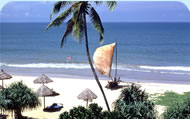
The Rainy Seasons: Two Monsoons and Two Inter-Monsoons: Unlike four-season climates in western countries, the tropical island's weather is shaped by a specific pattern of two monsoons and two inter-monsoon periods. Understanding the country's four climatic periods is key. First Inter-Monsoon (FIM), from March to April: A transitional period with sporadic, localized thunderstorms. Southwest Monsoon (Yala), from May to September: The main wet season for the southwestern half of the island, including popular beach destinations. Second Inter-Monsoon (SIM), from October to November: Often the wettest period of the year for many areas, with heavy rains possible island-wide. Northeast Monsoon (Maha), from December to February: Brings rain to the north and east while the rest of the country enjoys dry, sunny weather The Rice Cultivation Seasons: Yala and Maha Maha Season (the "Major" Season): Lasting from September to March, this is the most significant period, contributing 65-70% of the year's rice. Planting uses the second inter-monsoon rains, and the harvest is a key agricultural event. Yala Season (the "Minor" Season): From May to August, this is the secondary cultivation season. It contributes about 30-35% of the annual rice production. Cultivation depends on the first inter-monsoon and the early rains of the southwest monsoon Sri Lanka Holidays is the Total Holiday Experience (THE), steeped in millenniums of glorious ancient Sinhalese civilization of man-made Water World & Buddhism, nestled in The Land of Delights surrounded by pristine tropical beaches, and wrapped in natural beauty & vicissitude of biodiversity hotspot of tropics. Sri Lanka Holidays is the Land of Delights. It shall not flag or fail. You will have fun & frolic on the beaches, you will make merry in the hills & plains. You will enjoy the jolly journeys as well as the diverse destinations. You will be enlightened by the numerous cultural attractions to the hilt; you will get thrilled by the diverse nature, adventure & wildlife reserves to boot. Sri Lanka Holidays is a sunken treasure. It can well be the least promoted world-class tourist destination. No pair of words in the language holds more magic than "sunken treasure". In the same vein, the pair of words "Sri Lanka Holidays" too holds out such magic to inspire, linger & bring joy to the hearts of all those who once visited the paradise-like tropical island. They long for more of the same. Sri Lanka Holidays is an ideal film location destination. "The whole of Sri Lanka is a film set" said Sir Carol Reed after shooting his film based on Joseph Conrad's "Outcast of the Islands" in Sri Lanka. The victory could be the sweetest, but then the struggle is the glory. Sri Lanka's beauty lies not simply in the diverse tourist destinations but also in the journeys that awaken you all to the glory. The roads, with their ever-changing landscape, vegetation, and terrain, provide an enlightening experience that carries you enthralled to each destination. Sri Lanka Holidays is unlike any other tourist destination. Sri Lanka, the drop pearl or a pear-shaped tropical Island of green plains and blue mountains is located a mere 30km over the Palk Strait, at the southern tip of the Indian subcontinent. Sunk in the 30km of shallow sea in between the headlands, is a treacherous strand of coral reefs and sandbanks: Adam's Bridge. All around the island is 1700 km of palm-fringed golden sands, swept by the turquoise waters of the Indian Ocean. The interior is shrouded in luxurious vegetation exhibiting all shades and tones of green. Sri Lanka Holidays is Serendipity. "Life bears an inextinguishable flame in this land" Achsah Barlow Brewster 1921: Ceylon the Luxuriant. As much as the word Serendipity (to make discoveries by accident and sagacity of things which they were not in quest of) wouldn't be translated into your mother tongue to your satisfaction, Sri Lanka Holidays could hardly be narrated to my heart's content. I am bun Peiris: I take the liberty to present you a glimpse of the beauty and glory of my Sri Lanka, Our Island that I have toured all over since I was just eight years old with my maternal grandfather, Ayurvedic Dr. [Vaidya Shiromani] Prangige Silmon Peter Peiris Gunaratne [of Sri Vijaya Medical Hall, next to Vijitha Cinema at Ratmalana, 15 km south of Fort, Colombo] of Lakshapatiya, Moratuwa. Moratuwa is my hometown and school town. Written by bun Peiris of Moratuwa. |
|
|
Copyright 2007-2012 - All Rights Reserved by Riolta Lanka Holidays (Pvt) Ltd. Web Site Design by Web Crafts (Pvt.) Ltd. |



 |
 |


|

|
||||||||||||
Sri Lanka Holidays |