 |
 |


|

|
||||||||||||
Sri Lanka Holidays |
Home | Nature/Adventure | Ancient Glory | Rich Package | Sri Lanka Holidays | Total Holiday Experience | Travel Guide | Lanka History | Hotel Guide

|
||||||||||||||||||
|
Home | Nature/Adventure | Ancient Glory | Rich Package | Sri Lanka Holidays | Total Holiday Experience | Travel Guide | Lanka History | Hotel Guide |
|
|||||||||||||||||
|
 |
Waterworld: Ancient Sinhalese Irrigation and Conservation of water
Sri Lanka is a classic example of the "hydraulic civilization" which had
developed in the ancient period. With the immigration of Aryans from
Eastern India to Lanka in 543 BC, cultivation of rice developed into a
grand scale in the island. As the new essentially agricultural Aryan
civilization flourished, increasingly ambitious projects of irrigation
were launched at a pace with a view to harness the monsoon rains. It can
be safely deduced that the first great reservoirs ever in the world were
built in Sri Lanka. since the great lakes of Egypt, being merely
natural hollows into which streams were turned do not fall into the
category of man-made rainwater reservoirs as those of Lanka.
The rainwater reservoirs developed in the ancient kingdom of Anuradhapura (437 BC-845 AD) & Polonnaruwa (846 AD-1302 AD), Dry Zone of central lowlands resulted in two season of farming while the Wet Zone remained sparsely populated and covered by thick forests. Today around 12,000 ancient small dams & 320 ancient large dams together with thousands of man-made lakes dot the lowlands, with over 10,000 reservoirs in the Northern Province alone. Today Ancient Sinhalese irrigation supplemented by Modern Irrigation Projects continue to provide the lifeline: self sufficiency in rice, the staple food of the Sri Lankans. The vast reservoirs depict the rich cultural heritage of the unbroken recorded civilization of the Sinhalese. Furthermore, in the context of wetlands, it must be noted that non existence of natural lakes in the tropical island of Sri Lanka was compensated by the man-made lakes. The major (ancient & modern) irrigation reservoirs (each more than 200 ha) cover an area of 87854 ha, while the seasonal/minor (ancient) irrigation tanks (each less than 200 ha) account for 52250 ha.
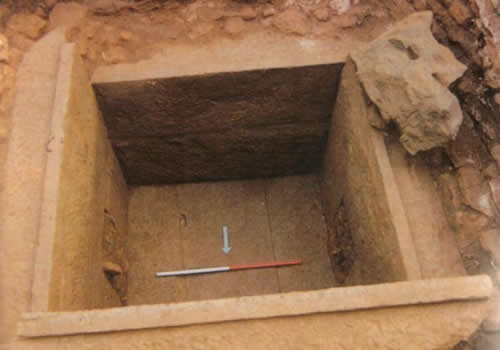
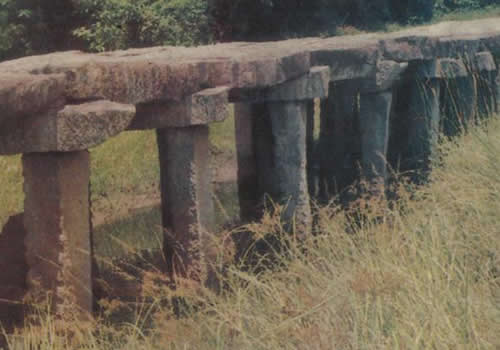
"It is possible, that in no other part of the world are there to be found within the same space the remains of so many works of irrigation which are, at the same time of such great antiquity, and of such vast magnitude, as in Ceylon. Probably no other country can exhibit works so numerous, and at the same time so ancient and extensive, within the same limited area, as this island" John Baily, Assistant government Agent of Badulla in a report to the Governor of British Ceylon (now Sri Lanka) in the year 1855. "The stupendous ruins of the reservoirs are the proudest monuments which remain of the former greatness of the country... Excepting the exaggerated dimensions of Lake Moeris in Central Egypt and the mysterious 'basin of Al Aram", the bursting of whose embankment devastated the Arabian city of Mareb, no similar constructions formed by any race, whether ancient or modern, exceed in colossal magnitude the stupendous tanks in Ceylon. The reservoir of Kohrud at Ispahan, the artificial lake of Ajmeer, or the tank of Hyder in Mysore, can no more be compared in extent or grandeur with Kalawewa or Padivil-colam (Padawiya) than the conduits of Hazekiah, the kanats of the Persians, or the subterranean water-courses of Peru can vie with the Ellahara canal, which probably connected the lake of Minneri and the "Sea of Parakrama" with the Anban-anaga river." Above was narrated by Sir Emerson Tennent (1843-1850) a Colonial Secretary before the extensive investigation, survey and restoration of "Sea Of Parakrama" and "Ellahara canal". The first rainwater reservoirThe first modest works of hydraulic engineering dates back to earliest days of the Sinhalese civilization of the Island.Channeling water to the irrigation reservoirs The conservation of water was done by way of constructing massive causeways and anicuts across the larger rivers and turning the water into excavated channel which conveyed it sometimes many miles, over apparently flat country and impounded the water eventually in large reservoirs of chain of reservoirs. The reservoirs were built in the cascade system at slightly varying elevations so that there often was a series of reservoirs to take the overflow from the one above it. The exit of water was regulated by means of sluices to the rice fields. 300 BC Ancient Bisokotuwa (Queen enclosure) Vs. Modern Sluice gateThe finest example of the ingenuity of the Sinhalese irrigation engineering is the invention of the "Biso-kotuwa" (meaning queen's enclosure in Sinhalese) in 3rd century B.C. Biso-kotuwa is the equivalent of the modern valve-pit, which operates in the regulation of the outward flow of water. It was the invention of biso kotuwa which permitted the Sinhalese to proceed boldly with the construction of vast reservoirs that still rank among the finest and greatest work of its kind in the world. Henry Parker (Irrigation Department, British Ceylon) narrated that by building these "Biso-kotuwas", Sinhalese engineers established a claim to be considered as the inventors of the 'valve-pit' more than 2,100 years ago.The great royal tank builders of ancient Lanka
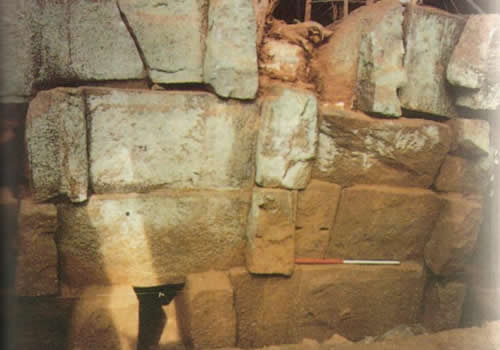
The Sea of Parakrama (Parakrama Samudra)Network of canals to surrounding areaOne of the canals (Yoda Ela, also called Jaya Ganga), the ancient engineers demonstrated their prodigious skill maintaining a steady gradient of less than 20cm per kilometer (1 ft per mile) over distances that eventually stretched to 80 km (50 miles).The DamsThe dams were built at an oblique angle, exposing the masonry to a lesser degree of violent shocks caused by impact of large floating tree trunks and other debris.Decline of the ancient Hydraulic civilization of Sri LankaQuote A. Dennis N. Fernando (Fellow National Academy of Sciences)The fall of the ancient hydraulic civilization of Sri Lanka in the 13th century was due to sudden Natural Cataclysmic change of the river course of the Mahaweli Ganga & was not due to foreign invasions as historians would want us to believe. The scientific evidence is clearly seen in the aerial photographs of the old course of the Mahaweli Ganga & its new river courses. The ancient Mahaweli with its ancient chaityas which were beside the old river like a string of pearls now lay stranded beside it. While the present river flows elsewhere with no chaityas beside it which event took place in circa 1220 AD. This sudden geological cataclysm that changed the river course that sustained our ancient hydraulic civilization, led to disease & famine. This resulted in the major part of the population to abandon these areas & move to the Wet & Intermediate Zones where the king also established himself at Dambadeniya, Kurunagala, Gampola, Kotte & Kandy. Unquote. 'Chaityas' is another name for stupas (dagobas) Further Decline of Ancient irrigation schemes during British Colonialism (1815-1948) in CeylonDuring the early period of British rule the colonial administration was pre-occupied with military & political consolidation, & thereafter, with capitalist enterprise in plantation exploiting the riches of the island supplanted cultivation of rice with cash crops, first coffee & then Tea & Rubber. With no interest taken & no support extended to the farmers on irrigation of paddy fields, the tanks gradually fell into disrepair, turning much of the countryside into malarial swampland. A modern historian calls this a "regrettable but understandable situation, given the fact that the higher bureaucracy itself had been so deeply involved in plantation agriculture"To give the devil his due credit, we must hasten to add that the Sir Emerson Tennent (1843-1850) a Colonial Secretary, who authored the famous book CEYLON-An Account of the Island (1859), focused attention on the importance of irrigation. The British governor, Sir Henry Ward (1855-1869) deserves to be greatly remembered for his enlightened irrigation policy & his insight into the psychology of the Sinhalese farmer. Ward restored some of the ancient irrigation works, stating that the British administrators before him had "...never devoted a fair proportion of the revenue towards the restoration of old works... & the one thing that comes home to every Sinhalese is the improvement of those means of irrigation which the climate rendered indispensable... Rehabilitation of ancient rainwater reservoirsThe dire situation of the island resulted in a national independence movement taking root over the issues of land, irrigation & cultivation. Having realized the gravity of the situation, during the second half of the 19th century & first half of the 20th century, the British colonialists launched on a project of restoration of ancient rainwater reservoirs. Restoration of the major Kala Wewa rainwater reservoir with a capacity of nearly 145 million cbm was carried about during 1885 to 1887.Following the independence from the British in 1948, the rehabilitation of major ancient irrigation works has been accelerated by the national leaders of the independent Ceylon. Largest ancient rainwater reservoirsThe Sea of Parakrama (2100 ha), Kaudulla (2537 ha), Minneriya (2550 ha), Huruluwewa (2125 ha), Kala Wewa rainwater reservoir (2583 ha), Mahakanadarawa (1457 ha), Nachchaduwa (1785 ha), Padaviya (2357 ha), Rajangana (1600 ha)Large and medium reservoirs73 major irrigation reservoirs (ancient) covering an area of 70850 ha160 Medium scale reservoirs (ancient) covering an area of 17004 ha 10000 minor irrigation reservoirs (ancient) covering an area of 39271 ha Floodplain lakes covering an area of 4049 ha Ancient irrigation Vs Modern irrigation"Many are the instances where the modern engineer has frequently found himself anticipated by an unnamed predecessor" Ceylonese historian R. L BrohierGal Oya SchemeIn 1952, modern Gal Oya Scheme testified to the brilliance of the ancient masterminds of irrigation engineering in Lanka: the discovery of remnants dated back to 1500 years of a dam site and two sluices almost exactly at the locations determined for the new reservoir by the engineers at the Gal Oya project. In order to preserve the excavated ruins of the dams & sluice gates, the priceless archeological findings, the government decided to move the new dam site to another location.Maduru - Oya reservoirIn 1978 when modern engineers cleared the jungle to pave the way for the modern Maduru-Oya reservoir they stumbled on an ancient breached earth dam at the very spot where engineering experts had decided to straddle the river. This dam a little over 23 meters high has been dated to be over 2000 years old & indicates the existence of a vast reservoir before its breach.Natural Wetlands of Sri LankaInland fresh water wetlands (eg. Rivers, streams, marshes, swamp forests, & Villus)Sri Lanka has an extensive network of rivers & streams that drain a total of 103 distinct natural river basins running to 4500 km. The river basins originate in Central Highlands & flow through all three peneplains. River Mahaweli is the largest in the island.The Villu wetlandsAlthough there are no large natural lakes in Sri Lanka, there are several flood plain lakes called Villu cover a total area of 12500 ha. Handapana & Pendiya Villu (796) is the largest of the entire Mahaweli Villu system.Fresh water MarshesA good example of Fresh Water Marshes is Muthurajawela Marsh, which is the largest peat bog in Sri Lanka.Fresh water Swamp ForestA good example is the Walauwa Watta Wathurana Swamp forest (12ha) located in the Kalu Ganga River basin.Salt water wetlands(eg. Lagoons, estuaries, mangroves, saltpans, sea grass beds & coral reefs)Estuaries & MangrovesTypical example of estuaries with mangrove wetlands in Sri Lanka includes the Maduganga estuary & the Bentota estuary.LagoonsAround 42 lagoons are found around the coast of the island. Examples are Bundala Lagoon, Mundel Lake & Kalametiya Lagoon.Coral reefs & Sea grass bedsExtensive coral reef habitats occur in the Gulf of Mannar (north western coast), Trincomalee to Kalmunai (East coast) & several areas including Rumassala & Hikkaduwa in the South & Southwestern coast.Man made wetlands in the island apart from rainwater reservoirsRice FieldsTotal area under rice cultivation is about 780,000 ha (12% of the total land area) which are characterized by the presence of a standing water body, which is temporary & seasonal.Salt pans (Salt lewayas)Hambantota of southern coast is the salt capital of the island. Salt is produced by channeling seawater into the lewayas (pans). The lewayas with dazzlingly white saltpans surround the town. Once the water is evaporated, the residual salt is scraped up, raked in, collected & sold.MORE INFORMATION: Modern irrigation Projects of Sri Lanka |
|
|
Copyright 2007-2012 - All Rights Reserved by Riolta Lanka Holidays (Pvt) Ltd. Web Site Design by Web Crafts (Pvt.) Ltd. |